
Reasonable Accommodation for Disability – What the Law Requires
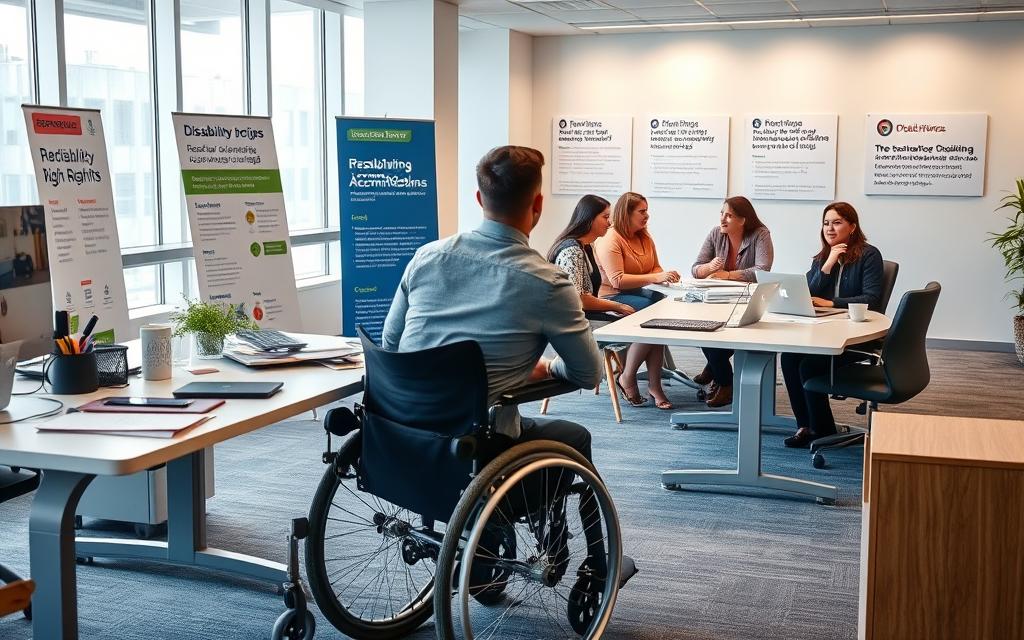
Have you ever thought about how workplaces help employees with disabilities? The idea of reasonable accommodation is key. It helps make workplaces fair for everyone.
The Americans with Disabilities Act (ADA) sets rules for workplaces. It makes sure places of work are open to everyone. This means people with disabilities can do their jobs well.
Reasonable accommodation isn’t just for special treatment. It’s about making sure everyone has a chance to do their best. It lets people with disabilities be part of their teams.
Table of Contents
Key Takeaways
- Reasonable accommodation is a legal requirement under the ADA
- Accommodations must enable individuals to perform core job functions
- Employers have a responsibility to make workplace modifications
- Accommodations can range from physical space changes to policy adjustments
- The goal is to promote workplace inclusivity and equal opportunity
Understanding Reasonable Accommodation for Disability
Reasonable accommodation is key for making workplaces accessible for everyone. It helps employees with disabilities do their jobs well. It makes sure everyone feels included and can do their best work.
It means changing work places to fit what employees need. This can be many things. It helps everyone have a fair chance to succeed at work.
Definition of Reasonable Accommodation
Employers must make changes to help employees with disabilities. These changes help workers do their jobs without changing what they do too much.
Purpose of Reasonable Accommodation
The main reasons for disability accommodations are:
- Removing barriers at work
- Ensuring everyone has a fair chance at work
- Helping workers do their best
- Making workplaces more diverse
Examples of Reasonable Accommodations
There are many kinds of disability accommodations:
| Accommodation Type | Specific Example |
|---|---|
| Physical Workspace | Installing wheelchair ramps or adjustable desks |
| Technology Adaptation | Providing screen readers or voice-to-text software |
| Schedule Flexibility | Allowing modified work hours for medical treatments |
| Communication Support | Offering sign language interpreters |
These examples show how important it is to make workplaces welcoming for everyone.
Legal Framework Surrounding Disability Accommodation
The U.S. has laws to protect people with disabilities. These laws help make sure everyone gets a fair chance. They cover many areas where people work and live.
Over time, laws have changed to help people with disabilities more. These changes make sure they are treated fairly in many places.
The Americans with Disabilities Act (ADA)
The ADA is a big deal for disability rights. It was made in 1990. It helps protect people from being treated unfairly in many ways.
- Employment opportunities
- Public services and transportation
- Public accommodations
- Telecommunications
Rehabilitation Act of 1973
This law came before the ADA. It focuses on programs that get federal money. Section 504 makes sure these programs don’t discriminate against people with disabilities.
| Legislation | Key Protections | Scope |
|---|---|---|
| ADA | Comprehensive disability rights | Private and public sectors |
| Rehabilitation Act | Federal program accessibility | Government and federally funded programs |
Fair Housing Act
The Fair Housing Act helps people with disabilities in housing. It makes sure they have equal access and chance to live in homes.
Together, these laws make sure people with disabilities are protected. They help them in many parts of life, like work and home.
Who is Eligible for Reasonable Accommodation?
Knowing who can get workplace accommodations is key for employees. The ADA guide helps understand who gets special help at work.
The law’s definition of disability is wider than many think. It covers many conditions that limit major life activities.
Definition of Disability under the Law
A disability can be:
- Physical impairments
- Mental health conditions
- Chronic illnesses
- Cognitive or sensory limitations
- Temporary or episodic conditions
Determining Eligibility for Accommodations
Figuring out who needs accommodations is a team effort. It involves several steps:
- Documenting the medical condition
- Identifying specific workplace limitations
- Discussing possible accommodations
- Evaluating job essential functions
| Disability Category | Potential Accommodations | Legal Protection |
|---|---|---|
| Physical Disabilities | Workspace modifications | ADA Full Coverage |
| Mental Health Conditions | Flexible scheduling | Rehabilitation Act Protection |
| Chronic Illnesses | Medical leave adjustments | EEOC Guidelines |
Key Consideration: Employees must be qualified for their job with or without accommodations. The aim is to help them do their job well.
Types of Reasonable Accommodations
Reasonable accommodations help people with disabilities do well in life. They make sure everyone has a fair chance at work, school, and home.

Workplaces need special help for people with physical or mental health issues. Each place is different, so we need different ways to help.
Workplace Accommodations
Workplaces can be made more welcoming. This is done by following disability laws. Employers can offer many kinds of help.
- Ergonomic workstation modifications
- Flexible work schedules
- Assistive technology implementation
- Job task restructuring
Educational Accommodations
Schools also need to help students with mental health issues. They can do this in many ways.
- Extended testing time
- Alternative assessment methods
- Note-taking assistance
- Specialized learning materials
Housing Accommodations
Home modifications make life easier for people with disabilities. They make homes more accessible and comfortable.
| Accommodation Type | Purpose |
|---|---|
| Wheelchair ramps | Improve mobility access |
| Modified bathroom fixtures | Enhance personal independence |
| Service animal permissions | Support emotional and physical needs |
Each accommodation is a special way to help. It shows respect, independence, and fairness for all.
The Process for Requesting Reasonable Accommodations
Asking for disability accommodations can be tough. Knowing the steps helps you ask for what you need. This way, you protect your rights at work or school.
To ask for a reasonable accommodation, you need to follow a few steps. You must talk clearly, show the right papers, and work together to find solutions.
Essential Steps to Request Accommodations
- Identify specific workplace or educational limitations
- Prepare a detailed request disability accommodation explanation
- Gather relevant medical documentation
- Submit a formal ADA accommodation letter
- Engage in an interactive discussion with the employer or institution
Documentation Requirements
When you ask for ADA accommodations, you need lots of paperwork. Doctors should write:
- A clear description of the disability
- Specific work or study limitations
- Recommended reasonable accommodations
- Professional letterhead verification
Timelines for Response
The ADA doesn’t say exactly when to answer. But, places should respond quickly and fairly. Usually, you should hear back in 2-4 weeks.
Being open and ready to work together helps a lot. Stay calm, professional, and ready to give more info if asked.
Employer Responsibilities for Accommodations
Understanding ADA in the workplace is key. Employers must make sure everyone feels included. This means supporting employees with disabilities.
Employers have clear duties under the ADA. They must really listen to and help employees with their needs.
Duty to Engage in Interactive Process
The ADA’s interactive process is very important. Employers need to:
- Talk openly with employees about what they need
- Work together to find solutions
- Keep records of all talks and plans
- Act fast on requests for help
Assessing the Undue Hardship Standard
Not every request can be met. Employers can say it’s too hard if it:
- Would cost too much money
- Would mess up the business too much
- Would change what the business does
Things like the company’s size and money matter a lot.
Being fair and finding solutions is important. Employers should try hard to meet requests in a way that works for everyone.
Employee Rights and Protections
Employees with disabilities have important legal protections. These help them get the support they need at work. Knowing these rights makes workers feel more confident and empowered.
The rules for disability support at work are complex. But they are there to keep workers safe from unfair treatment. These rules help protect workers’ dignity and job chances.
Protections Against Retaliation
Workplace laws stop employers from punishing workers for asking for help. This includes:
- Termination after asking for help
- Demotion or fewer work hours
- Bad reviews
- Harassment or a bad work place
If a boss punishes someone for asking for help, the worker can get help from government agencies.
Confidentiality of Disability Information
Employers must keep an employee’s disability info private. Medical records and help details are safe under privacy laws.
Here are some privacy rules:
- Only a few people can see medical info
- Keep disability papers in a safe place
- Share info only when really needed
- Keep all records safe
Workers can rest easy knowing their health info is safe. They can ask for the help they need without worry.
Common Misconceptions about Reasonable Accommodations

Many people don’t understand what reasonable modifications for employees with disabilities mean. ADA workplace rights help make sure everyone is treated fairly. It’s important for employers and employees to know the truth about these myths.
Accommodations vs. Preferences
Some think accommodations are just for personal wishes. Reasonable modifications are changes that help people with disabilities do their jobs well. They make sure everyone has a fair chance at work.
- Accommodations address functional limitations
- Preferences are optional requests
- Legal requirements focus on essential job performance
Myths About Cost of Accommodations
Many believe that workplace accommodations are very costly. But, most are actually low-cost or free. The Job Accommodation Network says 56% of them cost nothing, and the rest are usually under $500.
- Most accommodations are affordable
- Investments in accessibility benefit everyone
- Tax credits can offset accommodation expenses
Employers should see that accommodations help everyone. They let people with disabilities do their best at work. By clearing up these myths, we can make workplaces more welcoming and supportive.
Challenges in Implementing Accommodations
Putting reasonable accommodations in the workplace is hard for both bosses and workers. The ADA workplace guide shows big hurdles that companies face. They need to help workers with disabilities well.
Many bosses don’t know all they need to do for disability rights at work. This makes it hard to make workplaces welcoming for everyone.
Lack of Awareness Among Employers
Many companies don’t know much about disability rights at work. This lack of knowledge makes it tough to do things right:
- They don’t get enough training on how to help with disabilities.
- They don’t understand the laws well.
- They think helping with disabilities costs too much.
- They don’t know how to talk to workers about help they need.
Insufficient Resources for Employees
Workers often face problems when they ask for help at work. This can really hurt their job growth and how well they do their job.
| Resource Challenge | Impact on Employee |
|---|---|
| Limited Disability Support | It’s harder to fit in at work |
| Inadequate Accommodation Information | It’s hard to ask for help |
| Financial Constraints | They might have to pay for help themselves |
Knowing these problems helps companies make workplaces better for everyone. They can really help workers with disabilities.
Best Practices for Employers
To make a workplace inclusive, employers need a plan and to follow ADA rules. They must make policies that help employees with disabilities. This makes the workplace welcoming for everyone.
For a workplace to be accessible, it needs a big plan. Companies should do more than just follow the law. They should make real chances for all workers.
Developing Effective Accommodation Policies
Good policies for work help in many ways. They should:
- Find and fix barriers in the workplace
- Have clear ways to talk to each other
- Make it easy for employees to ask for help
- Keep employee needs private
Staff Training on Disability Awareness
Training on disability helps make a workplace inclusive. Important parts of training include:
- Knowing about different disabilities
- Seeing and avoiding bias
- Learning how to talk to everyone well
- Creating a supportive work place
| Training Focus Area | Key Objectives | Expected Outcomes |
|---|---|---|
| Legal Compliance | Understand ADA requirements | Reduced legal risks |
| Communication Skills | Develop respectful interaction methods | Enhanced workplace relationships |
| Accommodation Strategies | Learn practical support techniques | Improved employee engagement |
Always keep improving and check policies often. This keeps the workplace accessible and ready for new needs.
Case Studies: Success Stories in Accommodation
Real-world examples show how job changes help disabled people in work and school. These stories show how good physical and mental health support can change careers and school experiences.
Accommodation strategies really help people with disabilities do well in their jobs. By using the right support, places become more welcoming. This lets people reach their full ability.
Innovative Workplace Accommodations
- Technology adaptations for employees with visual impairments
- Flexible scheduling for individuals managing chronic health conditions
- Ergonomic workspace modifications for physical disabilities
- Communication support tools for neurodivergent professionals
Sarah Rodriguez, a software engineer with hearing loss, got special help. Her company gave her tech and sign language interpreters. This let her be a top team member. It shows how good support helps everyone.
Educational Accommodation Achievements
Schools have also made big steps in helping students with different needs. Personalized learning plans, tech, and mental health support have helped students. They’ve overcome old challenges.
These stories tell us something important. Disability support is not a limit. It’s a chance for great success and being included.
Resources for Individuals Seeking Accommodations
Finding your way through disability rights act employment can be tough. It’s key to get the right help and advice. This is important for those wanting equal chance under disability law. Here are some great resources to help you understand and use your rights.

People with disabilities have many places to turn for help. These resources give important info and help with disability requests at work.
Federal Agencies Providing Support
- Equal Employment Opportunity Commission (EEOC)
- They give detailed advice on workplace discrimination
- They offer free talks on disability job issues
- Department of Justice ADA Information Line
- They answer questions on disability rights
- They share lots of info on legal protections
Nonprofit Organizations and Support Groups
Many nonprofit groups help people with disabilities a lot:
- Job Accommodation Network (JAN)
- Free consultation services
- They give expert advice on work changes
- National Disability Rights Network
- They help with legal support
- They help with state-level rights
The Human Rights Commission gives free talks on disability rights. They help groups and people learn about work changes and legal rights.
Accessing More Resources
You can find these resources in many ways:
- Official websites
- Dedicated hotlines
- Local government offices
- Online support sites
By using these resources, people with disabilities can fight for their rights. They can also get the help they need for work changes.
Future Trends in Reasonable Accommodation
The world of making workplaces accessible is changing fast. New tech and work settings are leading the way. Companies are updating their ADA guides to help employees more.
New tech is changing how we make workplaces accessible. It’s making it easier for people with disabilities to do well at work.
Impact of Remote Work on Accommodations
Remote work has changed how we help employees. It’s opened up new ways for people with disabilities to work:
- More flexibility in where and when they work
- Less physical barriers at work
- Better tools for digital access
Advances in Disability Rights Legislation
New laws are helping protect employees with disabilities more. Important changes include:
- More strict rules for accessibility
- Seeing neurodiversity as part of the workplace
- Broader ideas of what’s a fair accommodation
| Trend | Potential Impact |
|---|---|
| AI-Powered Assistive Technologies | Helping people work better together |
| Comprehensive Digital Accessibility | Making remote work better for everyone |
| Expanded Legal Protections | More inclusive workplaces |
The future of work promises more tailored, tech-based help. It will let employees with disabilities do their best.
Conclusion: The Importance of Reasonable Accommodation
Reasonable accommodation is key for equal chances for people with disabilities. The ADA has changed how places are inclusive. It lets people with talents help without obstacles.
By using smart ways to help, places make sure everyone can do well. This is more than just following the law. It’s about caring for everyone’s worth and working together.
We need to keep learning, feeling for others, and making new rules. Every help we give is a chance to see someone’s strengths. It’s about seeing disability as a part of who we are.
This way, we make a world that’s more creative, kind, and lively. It’s all about seeing diversity as a strength. When we help each other, we all grow and do our best.
So, making places inclusive is about moving forward together. It’s about letting everyone show their skills and reach their goals. Our world will be better if we value and celebrate our differences.


Leave a Comment