
Wilmette Divorce Lawyer: Steps To Protect Your Rights

Are you going through a divorce and worried about your future? Divorce is tough, both emotionally and legally. In Wilmette, Illinois, state laws are key to your rights and what happens next.
Keeping your legal rights safe needs careful planning and expert help. A good Wilmette divorce lawyer knows family law well. They guide you to protect your money and well-being.
Divorce deals with big things like splitting assets and child custody. Every choice affects your future a lot. So, having a lawyer is key to keep your rights safe.
Table of Contents
Key Takeaways
- Professional legal help is very important in divorce
- Knowing your rights helps protect your money
- Every divorce case is different and needs its own plan
- Being ready emotionally is as important as being ready legally
- Talking to a divorce lawyer early can avoid big mistakes
Understanding the Role of a Divorce Lawyer
Going through a divorce is hard. It needs a lawyer’s help. Lawyers are key in guiding clients through tough times. They protect rights and fight for fair outcomes.
What Divorce Lawyers Do
Divorce lawyers in Wilmette do many important things:
- They look at complex financial papers
- They plan out legal strategies
- They speak for clients in court
- They work out deals
- They make sure laws are followed in Illinois
Benefits of Professional Legal Representation
Having a divorce lawyer is very helpful. They give objective guidance. This helps clients make smart choices, even when it’s hard.
| Legal Benefits | Client Advantages |
|---|---|
| Local Court Knowledge | Streamlined Legal Process |
| Document Preparation | Avoiding Costly Mistakes |
| Strategic Negotiation | Favorable Settlements |
| Legal Rights Understanding | Comprehensive Protection |
Lawyers in Wilmette know the local courts well. They also have good connections in the legal world. This helps them fight for their clients, even when the other side has a lawyer.
Reasons to Consider Divorce
Divorce is a big life choice. It comes from many personal reasons. Knowing these reasons can help people decide about their future.
Emotional Factors
Emotions often lead couples to split up. Important signs include:
- Persistent communication breakdown
- Loss of emotional intimacy
- Ongoing patterns of disrespect
- Unresolved conflicts and resentment
Chronic emotional distress can significantly impact mental health and personal well-being. It’s key to know when a relationship stops helping you grow.
Financial Considerations
Money problems are another big reason for divorce. Issues include:
- Significant income disparities
- Accumulated debt
- Disagreements about financial management
- Economic instability
Money issues can cause a lot of stress. This stress can hurt the relationship a lot.
Impact on Children
Thinking about kids is very important when deciding to divorce. Parents need to think about:
- Potential emotional trauma
- Long-term developmental concerns
- Custody and co-parenting dynamics
- Maintaining stable support systems
Getting help from professionals can guide families through tough times.
The Divorce Process Explained
Going through a divorce is like trying to find your way through a maze. Knowing the steps can make things less stressful. It helps you get ready for what’s coming.
Divorce has many important steps. You need help from experts and to stay strong. People in Wilmette who are getting a divorce should know about the legal steps.
Filing for Divorce
The first step is filing papers. You must:
- Prepare and submit a formal divorce petition
- Serve divorce papers to the spouse
- Provide detailed personal and financial information
- Pay required court filing fees
The Discovery Phase
In the discovery phase, you and your spouse share important info. This includes:
- Gathering financial documents
- Completing detailed financial disclosures
- Identifying marital and separate assets
- Requesting additional documentation if needed
| Discovery Stage Component | Purpose | Typical Duration |
|---|---|---|
| Financial Disclosure | Complete transparency of assets | 30-60 days |
| Document Exchange | Verify financial statements | 45-90 days |
| Asset Valuation | Determine equitable distribution | 60-120 days |
Negotiation and Mediation
Good divorces often come from negotiation and mediation. Mediators help couples agree, saving money and stress.
Divorce lawyers help with tough talks. They make sure you get a fair deal on property, kids, and money.
Key Illinois Divorce Laws
Getting a divorce in Illinois means knowing about important laws. These laws help divide property, handle money, and look out for kids. They make sure both sides get a fair deal.
Grounds for Divorce in Illinois
Illinois has a no-fault divorce rule. This means you don’t have to say who was wrong. You just need to show the marriage can’t work anymore.
- Minimum separation period of six months
- Irretrievable breakdown of the marriage
- Mutual agreement on fundamental issues
Division of Assets
In Illinois, assets are divided fairly, not always equally. Courts look at many things to decide how to split things:
| Consideration | Impact on Asset Division |
|---|---|
| Each spouse’s contribution to marital property | Direct influence on asset allocation |
| Duration of marriage | Determines complexity of financial settlement |
| Individual economic circumstances | Guides fair distribution strategy |
To protect your assets, plan carefully. Here are some tips:
- Maintain detailed financial records
- Obtain professional valuations for significant assets
- Understand possible tax effects
Child Custody Laws
In Illinois, we talk about allocation of parental responsibilities. This means both parents work together for the best of the kids.
The state thinks it’s best for kids to have both parents involved. Courts look at who is better for the child. They consider things like how well each parent gets along and how stable they are.
Preparing for Your First Consultation
Going through a divorce needs careful planning. Your first meeting with a Wilmette divorce lawyer is key. It helps you understand your legal options and protect your interests.
Essential Documents to Bring
Having the right documents ready can make your first meeting smoother. Make a detailed file that shows your financial and personal life.
- Financial records (tax returns, bank statements, investment accounts)
- Marriage certificate and prenuptial agreements
- Property deed and mortgage information
- Recent pay stubs and employment documentation
- List of shared and individual assets
Critical Questions to Ask Your Lawyer
Your first meeting is a chance to learn about your lawyer. Asking the right questions helps you see if they’re a good fit for your case in Cook County.
- How long have you practiced family law in the Wilmette area?
- What is your approach to divorce cases – settlement or litigation?
- How many divorce cases have you handled in Cook County?
- What are the possible outcomes for property division in my case?
- What are your fees and billing practices?
Protecting Your Immediate Interests
At the meeting, focus on learning how to protect yourself. Talk about challenges, case length, and how you’ll communicate. A good Wilmette divorce lawyer will guide you on what to do first to keep your finances and personal life safe.
Factors Influencing Child Custody Decisions
Child custody decisions are very important. Courts look at many things to decide what’s best for the child. They make sure the child’s happiness and safety come first.

- The wishes of the child, taking into account their maturity and ability to express reasoned preferences
- The child’s adjustment to home, school, and community environments
- Mental and physical health of all individuals involved
- Level of conflict between parents
Best Interests of the Child
Courts don’t always choose one parent over the other. The main goal is to find a custody arrangement that is best for the child. They look at who has been caring for the child and who can meet their needs.
Role of Each Parent
Assessments look at important things about parents:
- Primary caregiver history
- Work schedule and availability
- Parenting skills
- Ability to provide stability
- Willingness to facilitate a relationship with the other parent
Custody Evaluations
In cases where parents disagree, experts may do detailed checks. These include talking to parents and kids, visiting homes, and looking at records. Parents should be honest and focus on the child’s needs.
Important things to consider are if there’s been violence, if someone is a sex offender, and how far apart parents live. The aim is to make a place where the child can feel safe and happy.
Financial Implications of Divorce
Divorce can make money matters very complicated. It’s important to understand your finances well. This helps protect your money and get a fair deal.
Spousal Support Calculation in Illinois
In Illinois, courts look at many things to figure out spousal support. They consider:
- The income and property of each person
- How much each person can earn now and in the future
- The lifestyle you had during your marriage
- How long you were married
- The age and health of both people
If you both make less than $500,000 and don’t have kids, there are special rules. Courts can change support based on your situation.
Types of Maintenance
Illinois has three main kinds of support:
- Temporary maintenance: Given while you’re getting divorced
- Reviewable maintenance: Checked on later
- Permanent maintenance: Support for a long time
Protecting Your Financial Assets
To keep your money safe, take these steps:
- Write down all shared money and debts
- Get copies of financial statements
- Watch joint accounts for strange activity
- Talk to financial experts about taxes
- Know the value of your retirement accounts
Protecting your money means being open and fair, not hiding it.
Mediation vs. Litigation
Divorce can be tough on families. They must choose between mediation and litigation to end their marriage.
Benefits of Mediation: A Collaborative Approach
Mediation helps couples avoid fighting. It saves money and time. It also lets them control their agreement.
- Significant cost savings compared to traditional litigation
- Faster resolution through convenient scheduling
- Greater control over final agreements
- Reduced emotional stress
The mediation steps are:
- Initial joint session explaining ground rules
- Identifying critical issues to resolve
- Information gathering and exchange
- Private caucuses with individual parties
- Negotiation facilitated by a neutral mediator
- Drafting a mutually agreeable settlement
When Litigation Becomes Necessary
Some cases need a judge’s help. This is when:
- Significant power imbalances exist between spouses
- Domestic violence threatens participant safety
- One spouse refuses honest financial disclosure
- Complex legal issues require judicial determination
Experienced divorce attorneys can effectively advocate in court, presenting evidence and protecting clients’ rights. Even litigated cases often result in settlement before trial, with skilled lawyers negotiating from a position of strength.
Navigating the Emotional Aspects of Divorce
Divorce is a big change that tests your emotional strength. It’s a journey that needs kindness to yourself and smart ways to handle your feelings. You must understand that your feelings are complex.
It’s key to find ways to keep your mind healthy during this tough time. Letting yourself feel sad about losing your marriage and future is a big step in healing.
Personal Emotional Management Strategies
- Seek support from trusted friends and family who provide emotional support without judgment
- Consider individual therapy with a mental health professional experienced in divorce issues
- Avoid making major life decisions during emotionally intense periods
- Maintain consistent self-care practices including regular exercise, adequate sleep, and healthy eating
Support Resource Strategies
| Resource Type | Purpose |
|---|---|
| Individual Therapy | Professional emotional guidance and processing |
| Support Groups | Shared experiences and community connection |
| Divorce Coaching | Strategic emotional and practical support |
It’s very important to keep your kids safe from your fights. Setting clear rules with your ex can help lower stress. Journaling is a great way to deal with hard feelings.
Healing is slow. Try not to worry too much about what your ex does. Be kind to yourself as you go through this big change.
Common Misconceptions About Divorce
Divorce is complex and hard. Many people have wrong ideas before starting. Knowing the truth about divorce myths is key to moving forward.
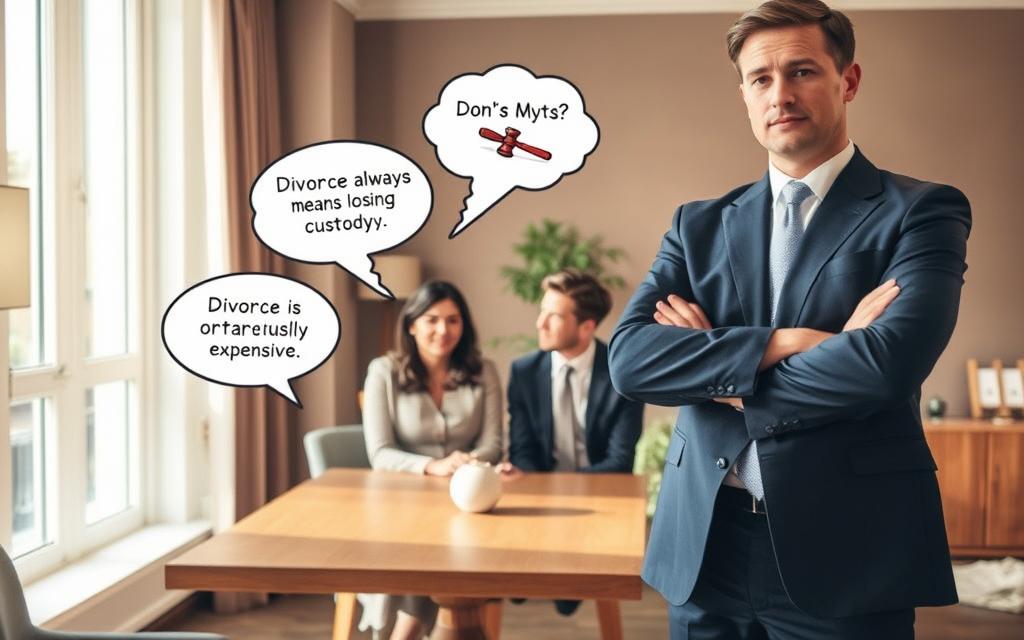
Debunking Popular Divorce Myths
Illinois divorce law is often not understood. Let’s look at seven common myths that make divorce harder:
- Myth 1: Mothers Always Get Child Custody
Illinois law looks at what’s best for the child, not who is a mom or dad. Courts check if each parent can care for the child well. - Myth 2: Adultery Significantly Impacts Property Division
Illinois is a no-fault divorce state. It usually doesn’t count marital mistakes when dividing property, unless the mistake wasted money. - Myth 3: Assets Are Always Split 50/50
Illinois divides assets fairly, not always 50/50. It looks at each spouse’s money, what they brought to the marriage, and future earnings. - Myth 4: A Spouse Can Prevent Divorce
Illinois lets couples divorce without fault. One person can’t stop the other from ending the marriage. - Myth 5: Divorce Always Requires Court Battles
Many divorces are settled without going to court. This saves time and money. - Myth 6: Uncontested Divorces Don’t Require Legal Help
Even easy divorces need a lawyer. They help with important documents and future effects. - Myth 7: Child Support Ends at 18
In Illinois, child support can go up to 19 if the child is in high school.
Understanding the Divorce Reality
Every divorce is different. Having realistic hopes and getting advice from divorce lawyers helps. Each case needs its own plan.
The Importance of Communication During Divorce
Talking during a divorce needs a smart plan and knowing how to handle feelings. Good talks can lower stress and help everyone. The right way can make a hard time easier and more useful.
Talking is key in divorce, with two main areas: talking to your lawyer and your ex. Knowing how to talk in these situations can really help your case.
Communicating with Your Lawyer: Building a Strong Partnership
Good lawyer-client relationships need open and clear talks. Here are key tips:
- Be honest about all important facts, even if they’re hard to share
- Answer your lawyer quickly when they ask for things
- Ask questions if you don’t get something
- Tell your lawyer what’s most important to you
- Keep them updated on big changes
- Be realistic and listen to their advice
Maintaining Communication with Your Ex-Partner
Talking to your ex can be tough but it’s very important. Here are some helpful tips:
- Keep talks focused and serious
- Write down important things (email or text)
- Avoid saying things that might upset them
- Answer their questions quickly
- Don’t make kids deal with grown-up problems
- Think about using special apps for talking to your ex
Courts like people who try to talk things out, like about kids. Remember, your lawyer is there to help with the law, not to be your friend. Keeping things professional helps them help you best during this hard time.
Post-Divorce Considerations
Life after divorce is complex. It involves legal and personal changes. Knowing how to change agreements and move forward is key to your future.
Modifications to Legal Agreements
Child support changes when parents’ money situation shifts. You need to show a significant change in circumstances. This could be:
- Big changes in income for either parent
- Big changes in what the kids need
- Big changes in work schedules for parents
Changing parenting time is possible when it’s best for the child. Courts look at moves, age changes, and changes in parents’ lives.

Legal Modification Process
Getting court approval for changes needs careful planning and a lawyer. Important steps are:
- Collecting all the evidence of changes
- Talking to a divorce lawyer
- Filing a petition with the court
- Showing why the changes are needed
| Type of Modification | Key Considerations |
|---|---|
| Child Support | Income changes, child’s evolving needs |
| Spousal Maintenance | Reviewable terms, substantial financial shifts |
| Parenting Time | Child’s best interests, parental circumstances |
Moving Forward Successfully
Healing after divorce takes action and feeling. Start new routines, work on being a good co-parent, and build your support network. Remember, growing is a journey, not a finish line.
Finding the Right Wilmette Divorce Lawyer
Finding the right divorce lawyer is not easy. It’s more than just picking the first one you see. You need someone who knows Illinois family law well and can help you.
Start by asking friends and family for lawyer names. Look up lawyers on state bar websites and legal directories. Choose lawyers who only do family law and have experience in Wilmette.
Initial Screening Strategies
Look at how lawyers talk and their reputation. Meet with several to see who fits best. Make sure they are in good standing with the Illinois State Bar.
It’s important to feel comfortable with your lawyer. You’ll share personal stuff with them during a tough time.
Critical Evaluation Points
Think about the lawyer’s location, how busy they are, and their fees. They should give honest advice without making false promises. A good lawyer will really listen to you and give advice just for you.



Leave a Comment