
One Lawyer Divorce: Steps To Simplify Your Case

Can one lawyer make your divorce easier? The One Lawyer Divorce way helps couples avoid fights. It’s a smart choice for those wanting a peaceful split.
Divorce doesn’t have to be a fight. Having one lawyer can make things smoother. It lowers stress and saves money. This method helps couples deal with legal issues better and cheaper.
This guide will show you how to handle a One Lawyer Divorce. It gives you the tools to make smart choices during a tough time.
Table of Contents
Key Takeaways
- One Lawyer Divorce minimizes conflict and legal expenses
- Collaborative approach reduces emotional strain
- Single legal representation can expedite divorce proceedings
- Couples maintain more control over their separation process
- Strategic legal guidance helps protect individual interests
Understanding One Lawyer Divorce
Divorce can be tough, but a one lawyer divorce makes it easier. It’s a way for couples to split up without fighting. This method helps keep costs down and makes things less stressful.
Definition of One Lawyer Divorce
A one lawyer divorce means one lawyer helps both sides. It’s different from the usual way of getting a divorce. Here, couples work together to make a plan for their split.
Differences from Traditional Divorce
- Cost-Effective: It costs less than the usual way of getting a divorce
- Less stress and fighting
- It goes faster
- You have more say in the final deal
Benefits of Using One Lawyer
Choosing a one lawyer divorce has many benefits:
- It’s easier to talk and understand each other
- It’s cheaper than the usual way
- It’s quicker
- It’s less stressful
In places like Florida and Texas, getting a no-fault divorce is easy. This fits well with the one lawyer divorce model. It means couples can split up without blaming each other, making things smoother.
The Initial Consultation
Getting ready for divorce starts with a first meeting with a lawyer. This meeting is key. It helps you know your legal choices and plan your divorce.
This meeting is your chance to learn about divorce. You’ll see if a one-lawyer divorce works for you. You’ll start making a plan with your lawyer.
What to Expect During Your First Meeting
Your first meeting will last about 60-90 minutes. The lawyer will:
- Look at your personal and money situation
- Check how complex your divorce is
- Tell you about possible legal plans
- See if a one-lawyer divorce is good for you
Essential Questions for Your Lawyer
Make a list of important questions to ask:
- How much experience do you have with one-lawyer divorces?
- How do you deal with conflicts of interest?
- What will the total cost be?
- How long will my divorce take?
- How will we keep in touch during the divorce?
Gathering Critical Documents
To get the most from your meeting, gather these documents:
- Marriage certificate
- Financial statements
- Recent tax returns
- Property deeds
- Retirement account statements
- Detailed debt information
- Child-related documents (if needed)
A good first meeting can make your divorce easier. It gives you clear steps to follow.
Assessing Your Situation
Going through a divorce means looking at your money and family life closely. You need to know about your stuff, who gets the kids, and who pays for what. This step makes the divorce easier and helps everyone get what’s fair.
Evaluating Assets and Debts: Property Division Tips
Splitting up property can be tricky, like in states where everything is shared. You should make a list of all the things you own together and what you owe. This includes:
- Real estate properties
- Bank accounts and investments
- Retirement accounts
- Vehicles and personal property
- Outstanding loans and credit card debts
Child Custody Guidance: Understanding Parental Responsibilities
Deciding on child custody is all about what’s best for the kid. You should think about different ways to share custody:
| Custody Type | Description | Key Considerations |
|---|---|---|
| Physical Custody | Where child mainly lives | Where they live, how close to school |
| Legal Custody | Who makes big decisions | Health, education, religion |
| Joint Custody | Both parents share duties | Working together, kid’s happiness |
Spousal Support Advice: Understanding Financial Considerations
Figuring out alimony involves many things. Important factors include:
- How long you were married
- How much each person can earn
- What your lifestyle was like together
- What each person did for the marriage
- How independent each person will be financially
Looking at these points helps make a fair support plan. It protects both people’s money.
The Divorce Process Overview
Going through a divorce can feel very hard. But knowing the main steps can make it easier. Legal advice helps make a clear plan to end a marriage without too much stress.
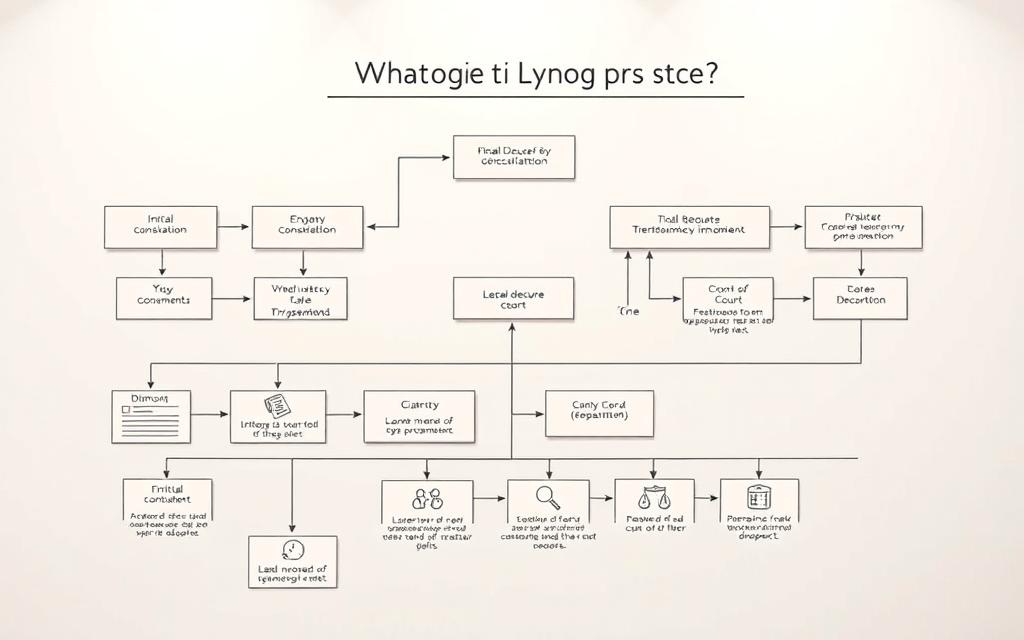
Every state has its own way of filing for divorce. But most follow a similar path. Family law experts say it’s best to get ready well before starting the legal process.
Key Steps in the Divorce Process
The divorce process has a few important stages:
- First meeting with a lawyer
- Getting all needed documents ready
- Filing the divorce papers
- Handing the papers to your spouse
- Sharing financial information
- Talking about and agreeing on terms
- Writing up the final agreement
- Getting the court’s approval and final decree
Timeline Expectations
Most simple divorces take 3-6 months to finish. But, waiting periods in different states can change this time. Some places make you wait 30 to 90 days before you can get a divorce.
Important Legal Terms Explained
- Petitioner: The one who starts the divorce
- Respondent: The one who gets the divorce papers
- Dissolution of Marriage: When a marriage officially ends
- Final Decree: The court document that ends the marriage
Knowing these terms helps you feel more sure and clear about the divorce process.
Drafting the Divorce Agreement
Making a good divorce agreement needs careful thought and planning. Getting help with divorce is very important at this time. Both sides work together to plan their future finances and personal lives.
The divorce agreement is like a map for couples splitting up. It outlines important parts of their new lives. A lawyer’s help is key to make sure it includes everything important.
Essential Components of the Agreement
A strong divorce agreement has a few key parts:
- Complete identification of both parties
- Clear statement of divorce consent
- Detailed division of marital property and assets
- Allocation of marital debts
- Child custody and visitation arrangements
- Child support provisions
- Spousal support terms
Customizing Your Agreement
It’s important to make the agreement fit your special situation. You can add flexible parts that cover:
- Creative ways to divide property
- Flexible parenting plans
- Plans for the future
- Special financial needs
Review Process with Your Lawyer
Working with a lawyer is key to make sure the agreement is legal, complete, and fair. Your lawyer will check every part carefully. This helps avoid problems later and makes sure it follows the law.
Remember, once you sign a divorce agreement, it’s usually permanent. So, it’s very important to understand and review it well.
Filing for Divorce
Going through the divorce filing process needs careful steps. First, you must prepare and send important papers to the court. Knowing how to do this can make your divorce go smoother.
Required Forms and Fees
Every state has its own rules for filing for divorce. But, most need the same basic papers. These include:
- Petition for Dissolution of Marriage
- Summons
- Financial affidavits
- Child support worksheets (if applicable)
- Parenting plan proposals
It’s wise to plan for the cost of filing, which is usually $200 to $500. If money is tight, you might get a fee waiver.
Common Mistakes to Avoid
Legal experts say to watch out for these big mistakes:
- Not filling out financial forms fully
- Getting the forms wrong
- Not serving your spouse right
- Missing important deadlines
Understanding Court Procedures
The divorce process has many important steps. Getting your papers right and on time is key. Courts have strict rules and steps you must follow.
| Step | Action Required | Typical Timeframe |
|---|---|---|
| Initial Filing | Submit divorce petition | 1-2 weeks |
| Serving Documents | Notify spouse of filing | 30 days |
| Response Period | Spouse files response | 20-30 days |
Getting help from a lawyer can make things easier. They help you follow the law and avoid problems.
Dispute Resolution Options
Going through a divorce can be tough, with disagreements making it harder. Knowing your options for solving disputes is key. It helps you get the support you need from lawyers during this tough time.
There are many ways to solve divorce disputes, depending on how complex things are and how well you and your partner get along. Lawyers often suggest trying different methods to find the best one for you.
Mediation: A Collaborative Approach
Mediation is a gentler way to solve disputes instead of going to court. A neutral person helps you and your partner talk things out:
- Less stress
- Cheaper than court
- You have more say
- It goes faster
Litigation: Formal Legal Resolution
If you can’t agree, you might need to go to court. This means:
- Going to court
- Legal fights
- A judge makes the decision
- It’s a safe way to protect your rights
Collaborative Divorce: A Complete Solution
Collaborative divorce uses experts to help you both agree on things. It usually includes:
- Lawyers for each side
- Financial experts
- Mental health pros
- Everyone tries to solve it without court
Each way has its own good points. Choosing the right one depends on your situation, how you talk to each other, and if you can work together.
Navigating Child Custody Issues
Child custody is a very sensitive part of divorce. Good Legal Representation helps parents know their rights and duties. It also makes sure the kids are taken care of first.
Parents need to understand the many Family Law Resources out there. These resources help them make choices that are best for their kids. The goal is to keep the child in a stable and loving environment.
Types of Custody Arrangements
Divorce Process Guidance explains the different custody options:
- Legal Custody: Rights to make big decisions about the child’s life
- Physical Custody: Where the child lives most of the time
- Sole Custody: One parent has all the rights and duties
- Joint Custody: Both parents share in making decisions and caring for the child
Creating a Parenting Plan
A good parenting plan covers important co-parenting details:
- Visitation schedules
- How to share holidays and vacations
- How parents will talk to each other
- How to solve disagreements
Modifying Custody Agreements
Custody agreements can change. Parents can ask for changes if their lives or their child’s needs change. The court looks at what’s best for the child when deciding on changes.
Getting help from a lawyer is key. They help make sure kids get the support they need during tough times.
Financial Matters in Divorce
Going through a divorce means you need to plan carefully. Knowing how to divide property is key. It helps make sure both sides are treated fairly.
Divorce is all about sharing financial details. Couples must be open about their money to find a fair deal.
Division of Marital Property
How states divide property is different. There are two main ways:
- Community Property States: Assets from marriage are split 50/50
- Equitable Distribution States: Assets are divided fairly, but not always equally
Important things to think about include:
- Figuring out what’s shared and what’s not
- Valuing things like businesses and investments
- Handling money that’s mixed together
Handling Joint Debt
Managing joint debt is very important in a divorce. Financial disclosure helps find out what debts you both have. You need a plan to keep your credit score safe.
Understanding Retirement Accounts
Dividing retirement accounts needs special rules. These rules are called Qualified Domestic Relations Orders (QDROs). They help split 401(k)s and pensions without taxes.
Getting help from financial experts is smart. They can guide you through dividing assets. This helps protect your money now and in the future.
Creating a Support Agreement

Going through a divorce means you need to plan your finances carefully. Support agreements help keep everyone financially stable. They are important for both spouses and any kids.
When you’re getting a divorce, you have to think about many things. These things help protect your money and your kids’ money. Knowing about support agreements is key to keeping your finances safe in the long run.
Types of Support Available
Support agreements cover different kinds of money help:
- Child support for kids who are not grown up yet
- Spousal support (alimony)
- Temporary money help
- Money help that lasts a long time
Calculating Child Support
Figuring out child support needs careful thought. States use certain rules to make sure it’s fair. These rules look at:
- How much money each parent makes
- How many kids there are
- Who gets to take care of the kids
- Healthcare costs for the kids
- Costs for taking care of the kids
To get child support right, you need to show all your financial details. You also need to know the rules in your state.
Spousal Support Considerations
Spousal support advice helps make sure money is divided fairly. Important things to think about are:
- How long you were married
- How much money each spouse makes
- How much money each spouse can make in the future
- Age and health of each spouse
- What kind of life you had while married
Courts look at these things to decide on spousal support. This support can be temporary or permanent based on the situation.
Getting help from a lawyer is important. They make sure support agreements are fair and follow the law.
Dealing with Emotional Challenges
Divorce can feel very hard, even for the strongest people. It’s key to think about our mental health during this time. We need to take care of ourselves and find support.
Coping Strategies During Divorce
Having good ways to deal with feelings is important. Here are some tips:
- Keep a regular daily routine for stability
- Write down your feelings in a journal
- Know and stick to your personal limits
- Focus on what you can control
- Don’t make quick decisions when you’re feeling strong emotions
Resources for Emotional Support
Going through a divorce needs a strong support system. Here are some good places to find help:
- See a professional counselor
- Join online or in-person divorce support groups
- Talk to friends and family you trust
- Read books about getting over a divorce
- Go to mental health workshops in your community
The Importance of Self-Care During Divorce
Taking care of yourself is not just nice, it’s necessary. Here’s how to take care of your mind and body:
- Exercise regularly
- Eat healthy, balanced foods
- Try stress-reducing activities like meditation
- Get enough sleep
- Stay away from too much alcohol and bad habits
Healing from a divorce is a journey that’s unique to each person. It’s okay to ask for help from mental health professionals. They can guide you through this tough time.
Communication with Your Ex-Spouse
Talking to an ex-spouse can be hard, even after a divorce. Good communication is key for a healthy relationship, when kids are involved. How you talk can really affect your co-parenting and your feelings.
Tips for Effective Communication
Good communication is vital for a smooth divorce. Here are some important tips:
- Use clear and neutral language when discussing important matters
- Stick to business-like communication channels like email or text
- Keep conversations focused on practical issues
- Avoid emotional or accusatory statements
- Practice active listening and empathy
Setting Boundaries
Setting clear boundaries is key for a respectful relationship. Good co-parenting communication means:
- Defining preferred communication methods
- Limiting discussions to child-related and practical matters
- Respecting each other’s personal space and new life arrangements
- Never using children as messengers
Handling Conflict Constructively
When you disagree, try to solve the problem. Good conflict resolution is about:
- Taking breaks when emotions escalate
- Focusing on shared interests
- Seeking win-win solutions
- Considering mediation if direct communication becomes difficult
- Documenting agreements in writing
Remember, you can get better at talking to your ex. By using these tips, you can make co-parenting better and less stressful for everyone.
Finalizing the Divorce
The journey of divorce ends with court finalization. This stage makes your separation official. It marks the end of one chapter and the start of another. Knowing the final steps helps you move forward with confidence.
The final divorce decree is the official document ending your marriage. It outlines agreements on property, child custody, and money matters.
What Happens in Court
In the final court hearing, a judge checks your divorce agreement. The process includes:
- Reviewing the marital settlement agreement
- Confirming both parties understand the terms
- Ensuring the agreement is fair and legally compliant
- Addressing any remaining questions about provisions
- Signing the final divorce decree
Final Decree Details
The final divorce decree is a legally binding court order. It includes instructions on:
- Property distribution
- Child custody arrangements
- Spousal support
- Child support obligations
Post-Divorce Tasks Checklist
After getting your final divorce decree, you need to do several things:
| Task Category | Specific Actions |
|---|---|
| Legal Documents | Update will, power of attorney, healthcare directives |
| Financial Accounts | Change beneficiaries, close joint accounts |
| Personal Identification | Update name on driver’s license, passport, social security card |
Doing these tasks helps you start your new life smoothly. Remember, finalizing your divorce is not just an ending, but an opportunity for personal growth and new beginnings.
After the Divorce: Moving Forward
Life after divorce can be tough, but it’s also a chance to grow and change. Adjusting to life after divorce needs patience, kindness to yourself, and planning.
Starting over after divorce means facing many important steps. These steps help you find yourself again.
Adjusting to Your New Reality
Divorce brings many feelings and challenges. Here are some tips to help you move on:
- Acknowledge your feelings without judgment
- Create a supportive network of friends and family
- Develop new personal routines and habits
- Practice self-care and emotional healing
Establishing Personal Independence
Being independent is key after divorce. Focus on:
- Rebuilding financial stability
- Developing personal career goals
- Creating a living space that reflects your identity
- Learning new skills and pursuing personal interests
Embracing New Relationship Dynamics
Don’t rush into new relationships. Instead, focus on:
- Healing and self-reflection
- Rebuilding social connections
- Understanding your relationship needs
- Being open to future opportunities
Remember, divorce is not an end, but a new beginning. Each step you take is a move towards personal growth and happiness.
Frequently Asked Questions
Going through a one lawyer divorce can be tough. These Divorce FAQs will answer common legal questions. They also give important insights into the process.
Common Concerns About One Lawyer Divorce
Couples thinking about a one lawyer divorce have many questions. Knowing the details can help you make good choices.
- Is a one lawyer divorce legal? Yes, when the attorney acts as a neutral facilitator
- Can we use one lawyer if we disagree on some issues? Potentially, if disagreements are minor
- How much does this process cost? Typically 50-70% less expensive than traditional divorce
Clarifying Misconceptions
Many people don’t understand the one lawyer divorce approach. Let’s clear up some common myths:
- One lawyer does not mean no legal representation
- It works for couples with children and complex assets
- Professional guidance ensures your rights are protected
Where to Find Additional Resources
Looking for more help can make your divorce journey easier:
| Resource Type | Recommended Sources |
|---|---|
| Legal Guidance | State Bar Association Referrals |
| Financial Planning | National Divorce Financial Analysts |
| Emotional Support | Divorce Support Groups |
Remember, every divorce is different. Talking to a qualified family law attorney is key. They can help figure out the best way for you.
Conclusion: Simplifying Your Divorce Journey
Your divorce journey is a big change in your life. It needs careful planning and a smart approach. A simple divorce process can turn a hard time into a chance for growth and good things to happen.
The one lawyer divorce method makes things easier. It helps avoid fights and keeps feelings safe. This way, both sides can solve problems together and respect each other. It helps you make deals that last and meet your needs.
Getting help from experts makes you feel sure about moving on. You learn to talk well, compromise, and be strong. This helps you in many areas of life, not just now.
Choosing a good divorce shows you’re grown up and looking ahead. Going for a team effort means a smoother change and better health later.



Leave a Comment