
What Is a No Zone? Meaning, Uses, and Examples
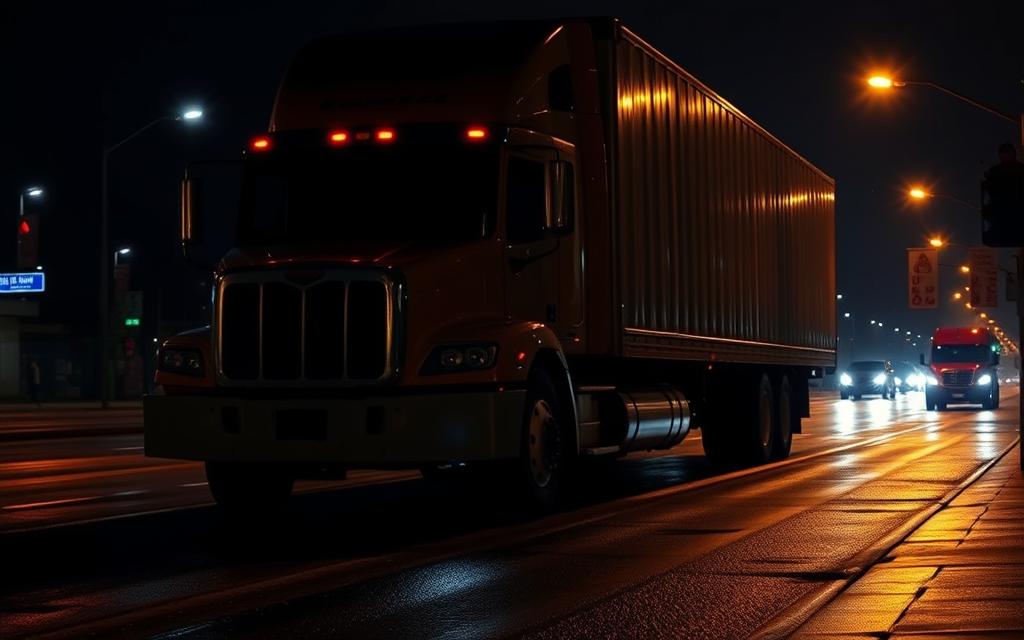
Ever wonder why accidents involving large trucks often result in catastrophic outcomes? The answer lies in invisible danger areas most drivers overlook. Known as “no zones,” these blind spots around commercial vehicles create hidden risks for smaller cars, motorcyclists, and pedestrians.
No zones refer to regions where truck operators have severely limited visibility. Staying in these areas for too long increases collision risks dramatically. According to data from The Barnes Firm, over 35% of truck-related crashes stem from drivers misjudging these critical spaces.
Understanding no zones isn’t just about safety—it’s legally significant. Personal injury cases often rely on proving whether drivers respected these boundaries. This article breaks down how to identify blind spots, practical strategies to avoid them, and their role in accident claims.
Table of Contents
Key Takeaways
- No zones are high-risk areas around trucks where visibility is nearly nonexistent.
- Ignoring these spaces contributes to thousands of preventable accidents annually.
- Adjusting driving habits near large vehicles can reduce collision risks by up to 50%.
- Legal teams like The Barnes Firm use no zone violations to build injury claims.
- Safety guidelines vary slightly by state but apply universally across U.S. roadways.
Defining No Zones and Blind Spots
Large commercial vehicles create unique visibility challenges that passenger car operators rarely face. Unlike standard vehicles, trucks have four primary danger areas where drivers can’t see nearby traffic. Legal experts at The Barnes Firm identify these as front (20+ feet), rear (up to 200 feet), right-side (entire lane), and left-side zones.
Truck Blind Spots Overview
Mirror placement and cab height drastically limit a truck driver’s field of vision. For example:
| Zone | Distance | Key Risk |
|---|---|---|
| Front | 20-30 ft | Small vehicles disappear below windshield |
| Rear | 30-200 ft | No rearview mirror visibility |
| Right Side | Entire lane | Largest blind spot area |
| Left Side | 1 lane width | Limited side mirror coverage |
Critical Differences in Visibility Risks
While all vehicles have blind spots, truck drivers face expanded danger zones due to vehicle length and cargo height. Passenger cars typically have 15-20 feet of rear visibility versus a semi-truck’s 200-foot blind area. Morris & Dewett attorneys note this size difference explains why 68% of truck collisions occur in no zones versus 22% in standard vehicle blind spots.
| Factor | Passenger Cars | Commercial Trucks |
|---|---|---|
| Average front blind spot | 3-6 ft | 20-30 ft |
| Mirror coverage | 180° | 90°-120° |
| Accident rate in blind areas | 22% | 68% |
Staying visible requires understanding these gaps. Drivers should avoid parallel driving and maintain extra space when passing.
What is a no zone? Exploring Its Meaning
Commercial trucks present unique hazards that extend beyond their sheer size—specifically in regions where operators lose sight of nearby vehicles. These danger spaces combine limited mirror coverage with massive vehicle dimensions, creating collision risks that change during routine driving actions.
Core Features of High-Risk Spaces
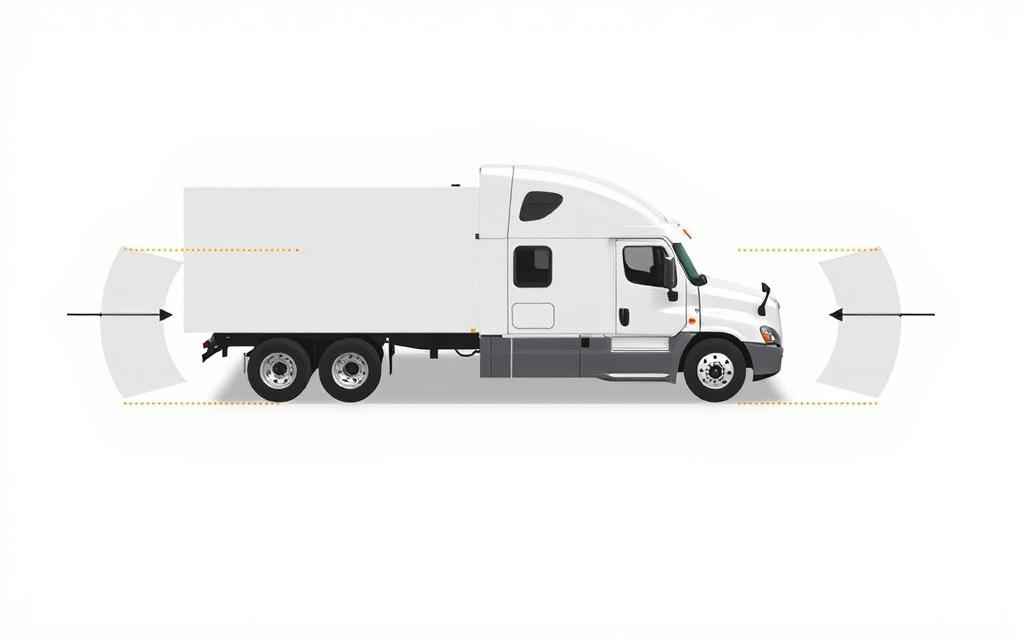
Unlike standard blind spots, no zones expand during turns and lane changes. The Federal Motor Carrier Safety Administration notes these areas stretch:
- 20 feet ahead of the cab (vehicles disappear below windshield level)
- Across entire lanes beside trailers (right-side coverage gaps)
- Behind trucks for 200+ feet (no rearview mirror visibility)
Morris & Dewett research shows turning maneuvers shift danger zones dramatically. When a semi changes direction:
| Movement | New Blind Spot | Risk Factor |
|---|---|---|
| Right turn | Expands left-side gap | +40% collision risk |
| Left turn | Creates front-right void | Hidden cyclists/pedestrians |
Mirror systems only cover 90-120 degrees—far less than passenger vehicles. This design leaves static and moving voids that drivers must anticipate. Staying visible requires maintaining 30+ feet behind trailers and passing quickly on the left.
No Zone Uses Across Industries
Transportation giants like FedEx and UPS invest millions annually to combat risks tied to visibility gaps. Their training programs emphasize proactive space management—a strategy now adopted by city bus fleets and freight carriers nationwide.
Commercial Transportation Protocols
Major trucking firms use simulation technology to teach drivers about dynamic blind spots. Marks & Harrison reports 72% of companies now mandate mirror adjustment checks before shifts. Key practices include:
- Scanning right-side zones during lane merges
- Maintaining 4-second gaps behind other vehicles
- Using convex mirrors to reduce front blind spots
Cross-Industry Safety Adaptations
Public transit agencies apply no zone principles to protect cyclists near buses. A 2023 study found cities using these methods reduced side-swipe accidents by 31%. School districts similarly train drivers to monitor extended rear zones when backing up.
| Vehicle Type | High-Risk Area | Prevention Tactics |
|---|---|---|
| Delivery Trucks | Front 25 ft | Install collision sensors |
| City Buses | Right-side lane | Angled mirror placements |
| Garbage Trucks | Rear 50 ft | Automatic braking systems |
The Barnes Firm recently highlighted a case where improper mirror calibration caused a fatal truck accident. This underscores why industries now treat visibility management as operational priority, not just compliance exercise.
How to Avoid No Zone Accidents
Navigating highways alongside large trucks demands more than basic awareness—it requires strategic visibility management. The Barnes Firm’s accident data reveals 83% of collisions occur when drivers misjudge truck movements. Let’s explore practical methods to stay safe.
Safety Tips for Drivers
Always assume truck operators can’t see your vehicle. Morris & Dewett attorneys recommend these actions:
- Pass swiftly on the left—never linger beside trailers
- Check mirrors every 6-8 seconds to monitor truck positions
- Use turn signals 100+ feet before lane changes
Effective Maneuvers to Stay Visible
When trapped in blind spots, accelerate or decelerate decisively. Sudden speed changes alert truck drivers through brake lights or engine noise. Maintain at least 30 feet behind trucks during merges—this gives both vehicles escape routes.
Maintaining a Safe Following Distance
The 4-second rule prevents rear-end collisions. Pick a roadside marker. When the truck passes it, count “one Mississippi” until your front bumper clears the spot. Adjust distances in rain or fog.
| Speed | Dry Conditions | Wet Roads |
|---|---|---|
| 40 mph | 80 ft | 160 ft |
| 60 mph | 240 ft | 360 ft |
Drivers involved in near-misses should seek free consultation with legal experts. Early documentation strengthens potential injury claims. Remember—consistent vigilance turns dangerous roads into manageable pathways.
Legal Implications and Accident Liability
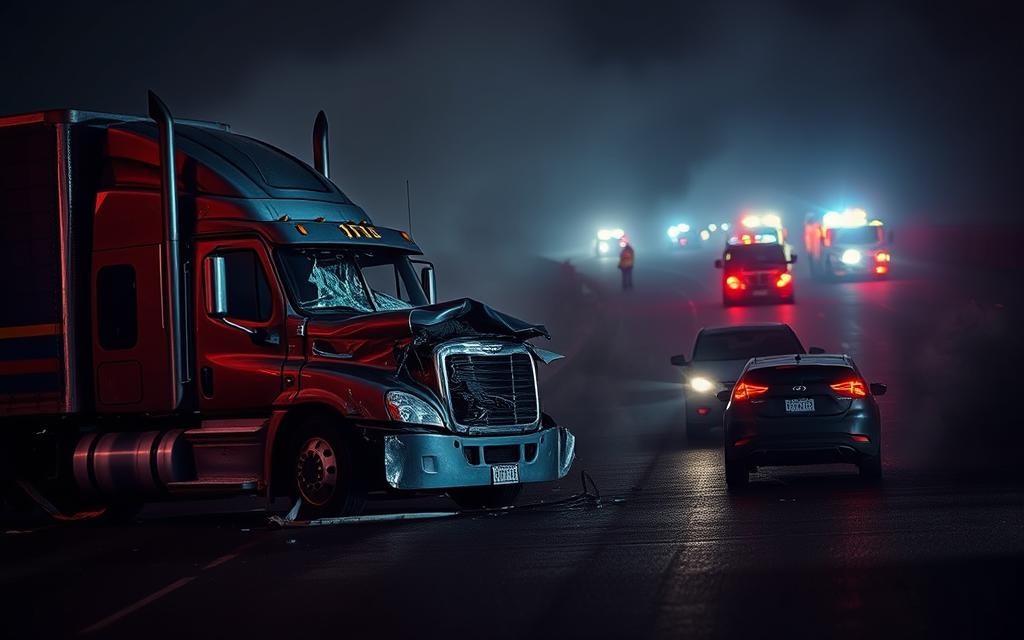
Determining fault in commercial vehicle collisions often becomes a complex legal battle. The Barnes Firm reports 42% of truck accident cases involve disputes over visibility zone violations. Both truck drivers and passenger vehicle operators share responsibility for avoiding high-risk areas.
Negligence and Fault in No Zone Accidents
Courts examine multiple factors when assigning liability. Marks & Harrison data shows:
| Responsible Party | Common Errors | Case Impact |
|---|---|---|
| Truck Driver | Faulty mirror systems | 65% liability |
| Other Driver | Unsafe lane changes | 35% liability |
Shared fault rules apply in 38 states. A 2023 personal injury case involved a motorcyclist lingering in a truck’s right-side blind spot—both parties bore partial responsibility.
Pursuing Personal Injury Claims
Victims should act quickly to preserve evidence. Critical steps include:
- Seeking medical evaluation within 24 hours
- Photographing vehicle positions and skid marks
- Requesting truck maintenance records
The Barnes Firm secured $2.1 million for a client when attorneys proved the trucking company ignored mirror defects. However, 29% of claims fail due to delayed consultation with legal experts.
Insurance companies often argue comparative negligence. Skilled lawyers use dashcam footage and electronic logging devices to counter these tactics. Early legal intervention triples success rates in injury compensation cases.
Practical Examples and Real-World Cases
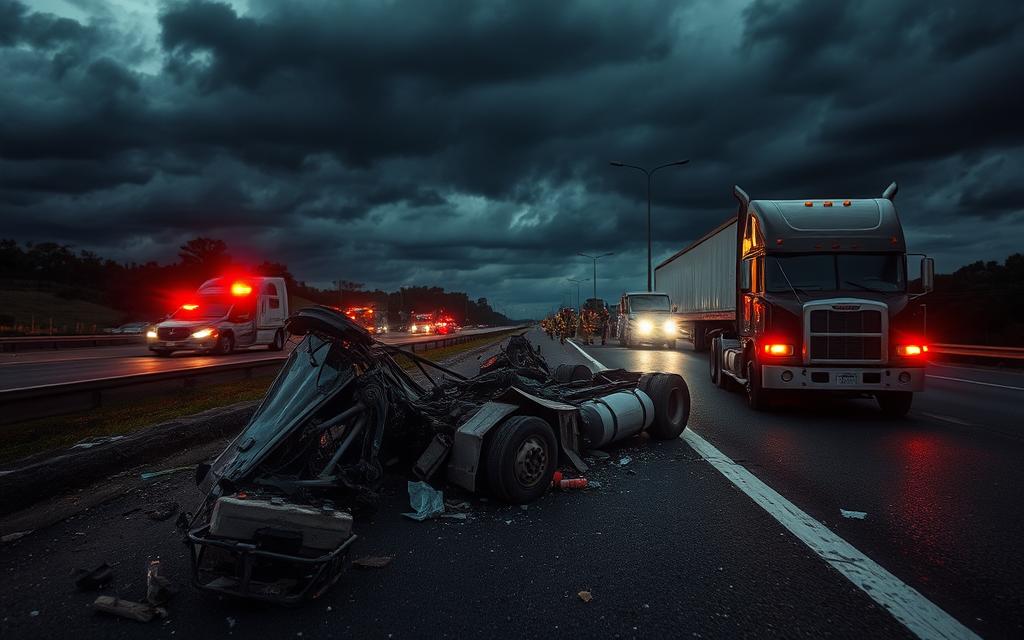
Collisions involving large vehicles often leave lasting physical and legal scars. Two documented incidents reveal how blind spot awareness could have altered outcomes.
Case Studies of Truck Accidents
A 2022 Buffalo crash killed three when a semi rear-ended stopped traffic. Investigators found the truck driver failed to adjust mirrors for low-light conditions. The resulting $4.8 million settlement highlighted improper vehicle maintenance as a key liability factor.
In Virginia, a sedan lingered in a rig’s right-side blind area during merging. The truck’s sudden lane shift caused catastrophic injuries. Court records show both drivers shared fault—the trucker for incomplete mirror checks, the car operator for ignoring warning signs.
Lessons Learned from Past Incidents
These accidents underscore critical patterns:
- 70% of blind spot collisions occur during lane changes or merges
- Medical costs for survivors average $287,000 per case
- Electronic logging devices now help reconstruct crash timelines
Legal teams increasingly use telematics data to prove negligence. A recent personal injury claim succeeded when GPS records showed a trucker ignored 12 right-side proximity alerts before striking a motorcycle.
Proactive measures reduce risks. Fleet managers report 58% fewer incidents after installing 360° camera systems. Drivers who master mirror adjustments and speed control transform potential tragedies into near-misses.
Conclusion
Understanding truck blind spots transforms ordinary drivers into informed protectors of road safety. These high-risk visibility gaps—front, rear, and sides of large vehicles—demand proactive strategies to avoid collisions. Data from The Barnes Firm confirms that over 35% of truck-related crashes stem from misjudging these spaces.
Key safety practices include maintaining 30+ feet behind trailers, passing decisively on the left, and avoiding lingering near a truck’s right-side danger zone. Proper mirror checks and speed adjustments remain critical, as trucks lack the maneuverability of smaller vehicles.
Legal outcomes often hinge on proving negligence in visibility management. Shared responsibility principles apply in most states, with cases frequently requiring expert analysis of driver actions and vehicle maintenance records. Victims should seek legal consultation promptly to preserve evidence and strengthen claims.
For those involved in accidents, early collaboration with attorneys like those at Morris & Dewett can clarify liability. Explore community commitment to solutions that prioritize prevention through education and technology. Awareness remains the most powerful tool for reducing risks—because every driver’s choices shape road safety outcomes.



Leave a Comment